
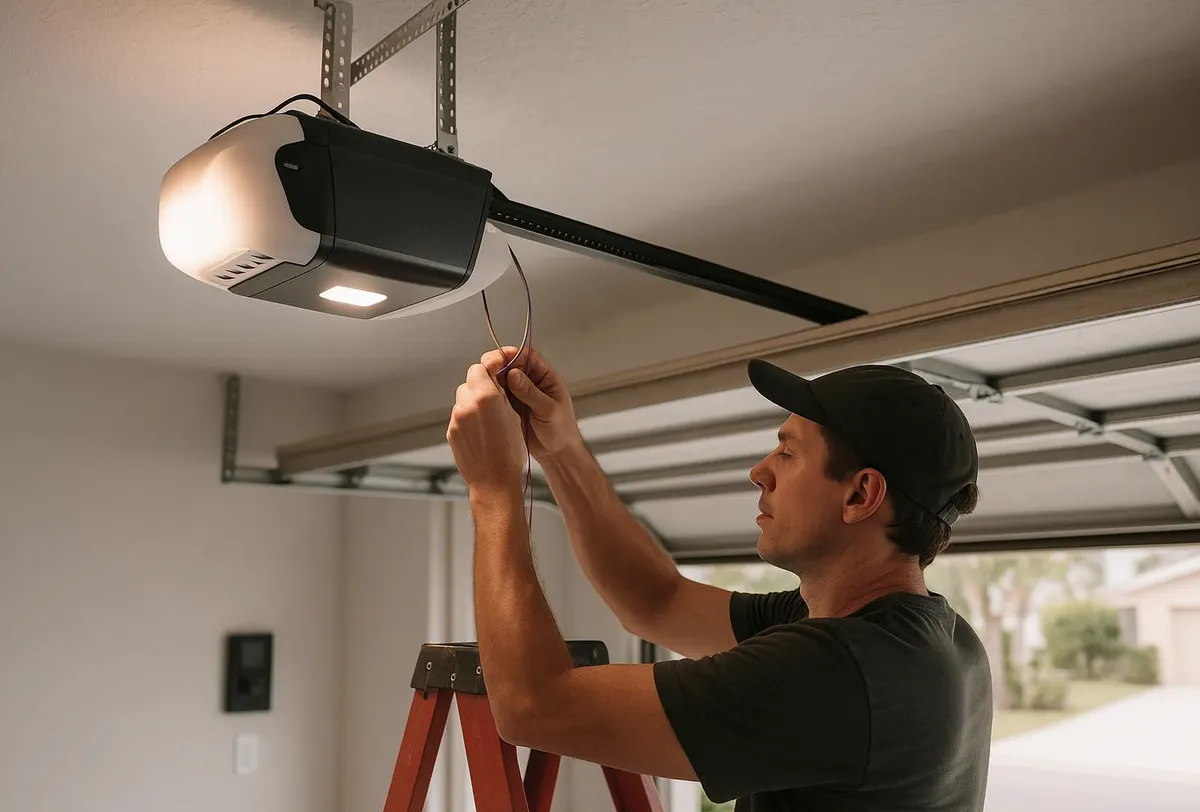
The Morning You Notice Something's Off
It usually happens on one of the first cool mornings of the season. You hit the opener button, and instead of the smooth roll you're used to, the door groans, jerks, or drags partway up the track. Maybe you spot a thin line of rust along the bottom panel, or the weatherstripping along the edge looks cracked and loose where it used to seal tight. That's the sound of a garage door that just spent months fighting heat, humidity, and afternoon downpours finally showing the wear.
In this part of Florida, "winterizing" a garage door doesn't mean protecting it from snow and ice. It means catching the damage that hurricane season and months of moisture have left behind before the drier, cooler air of late fall and winter makes those small problems worse.
What the Rainy Season Leaves Behind
Wood and composite panels absorb moisture during the humid months and swell slightly. As the air dries out, that same wood can shrink and warp, which throws off the door's alignment in the tracks. Metal hardware exposed to repeated humidity and, for homes closer to the coast, salt air, develops surface rust on hinges, rollers, and the bottom bracket. None of this happens overnight, but by the time the weather shifts, the symptoms show up all at once: sticking tracks, uneven movement, or a door that closes crooked.
- Rust spots on hinges, tracks, or the bottom seal retainer
- Swollen or warped panels that no longer sit flush in the frame
- Cracked or brittle weatherstripping along the bottom and sides
- Grinding or squealing when the door opens or closes
- Visible gaps where light shows through at the bottom or sides
Check the Springs and Hardware Now
Garage door springs do the heavy lifting, and months of humidity followed by cooler, drier air put extra stress on the metal. Look for gaps between coils, flat spots, or rust buildup — all signs a spring is weakening. Don't attempt to adjust or replace torsion springs yourself; they're under heavy tension and can cause serious injury if handled without the right tools.
While you're at it, walk the full length of both tracks and tighten any bolts or brackets that have worked loose from vibration. A quick coat of silicone-based lubricant (not WD-40, which attracts dust) on hinges, rollers, and the opener chain or screw drive will quiet most squeaks and reduce friction on parts that have been running through months of humid air.
Test the Opener and Safety Features
Storm season is hard on electronics, too — power surges and outages during afternoon downpours can scramble opener settings or wear down backup batteries. Test the auto-reverse safety feature by placing a block of wood in the door's path and closing it; the door should stop and reverse on contact. Check the photo-eye sensors near the bottom of the tracks for dirt or misalignment, since a dusty lens is a common cause of doors that won't close properly. If your opener has battery backup, this is a good time to replace the battery before the next outage.
Reseal Before the Air Dries Out
As humidity drops in the cooler months, old weatherstripping that was already stretched and softened by moisture tends to crack and pull away from the frame. Replacing it now keeps dust, pests, and drafts out of the garage, and it's one of the cheapest fixes that makes the biggest difference in comfort if you use the garage as a workspace.
Don't Forget the Wind-Load Hardware
Even though the heaviest storm activity is winding down, Citrus County homes are built with wind-load rated garage door hardware for a reason. Check that reinforcement struts, track bolts, and the bottom bracket are still securely fastened — storms earlier in the season can loosen hardware even when the door itself looks fine.
When to Call Inverness Garage Door Experts
If your door is dragging, making noise, or closing unevenly after a season of storms, it's worth having it looked at before small issues turn into a stuck door on a busy morning. Inverness Garage Door Experts offers Preventive Maintenance visits that cover spring tension, track alignment, and hardware checks, plus Spring Repair & Replacement for springs that are showing rust or wear from the season's humidity swings. We serve Inverness, Crystal River, Lecanto, Homosassa, Beverly Hills, Hernando, Floral City, and Citrus Springs.
Call Inverness Garage Door Experts today to get your garage door checked out and ready for the cooler months ahead.